
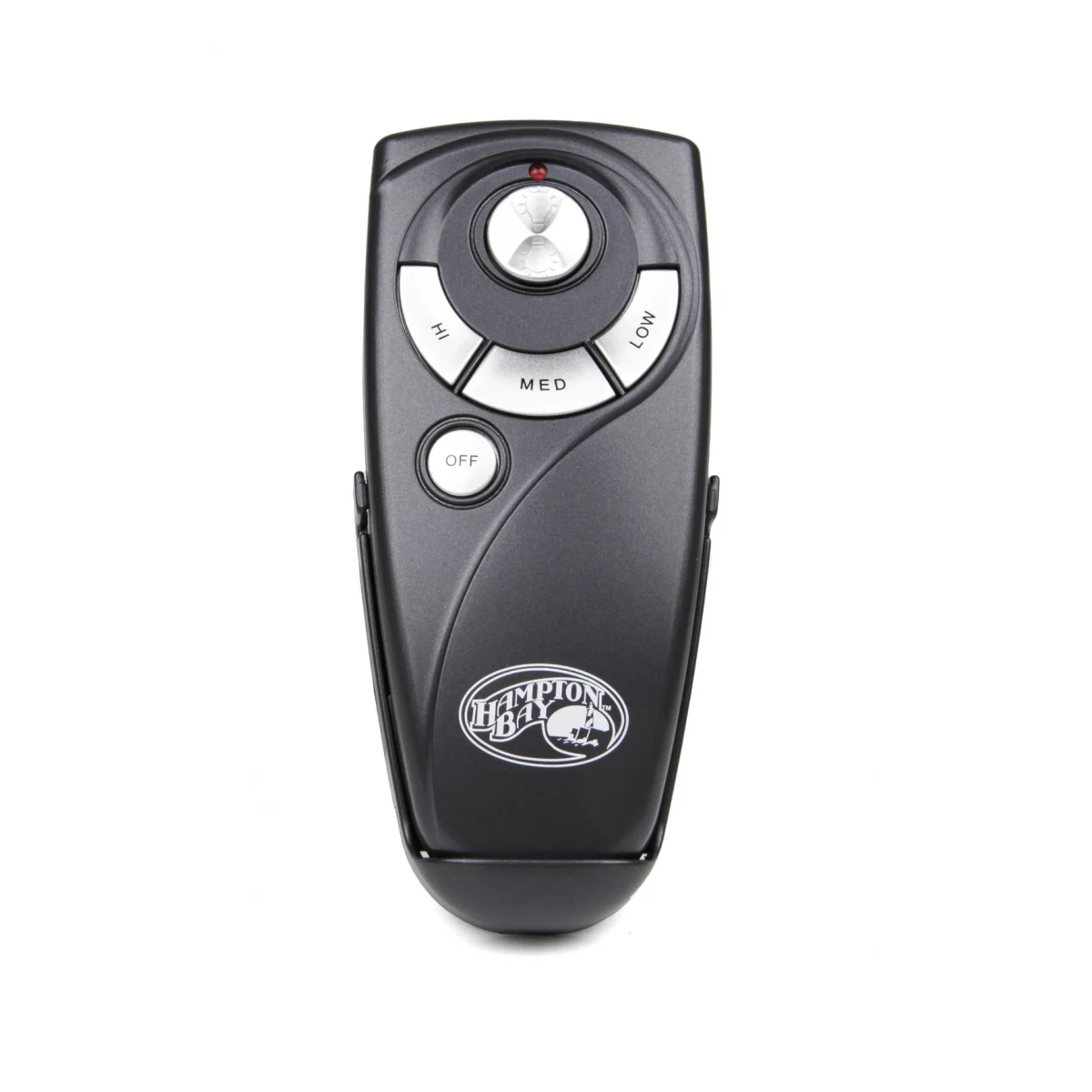
A universal ceiling fan remote is usually a kit that swaps out your fan's receiver, which means wiring work and often losing features like remote reverse, extra speeds, separate lights or timers. An exact-match replacement remote works with the receiver you already have and keeps every original feature. If your receiver works, an exact match is usually the better choice.
When a ceiling fan remote dies or goes missing, you have two roads. You can buy a replacement made for your exact remote, which talks to the receiver already in your fan. Or you can buy a universal remote kit, which comes with its own receiver that you install in place of the old one. Both can work. They are not equal, though, and the differences matter more than most product listings let on. Here’s a fair look at each.
What is a universal ceiling fan remote?
A ceiling fan remote doesn’t talk to the fan motor directly. It sends a coded radio signal to a receiver hidden in the fan’s canopy or switch housing, and that receiver switches the motor and the light. Every receiver listens on a particular frequency and expects a particular code format. Among the fan remotes in our catalog alone, you’ll find remotes in the 303 MHz, 304 MHz, 315 MHz and 433.92 MHz ranges, paired by DIP switches on some and by a learn button on others.
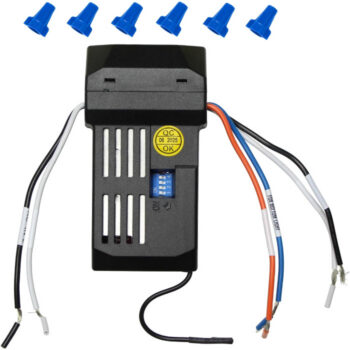
Because no single handheld can match every receiver, most products sold as “universal” ceiling fan remotes are really kits: a remote plus a new receiver. You remove your fan’s receiver and wire in the kit’s receiver, and the kit’s remote controls it. Hunter’s universal remote kit manual, for instance, tells installers to “place receiver in canopy”, and a Home Depot kit manual starts by having you remove the ceiling fan canopy from the mounting bracket.
Universal remotes for mini-split air conditioners are a different story. They use infrared and a code list, so one handheld can cover many brands. That doesn’t carry over to ceiling fans.
What is an exact-match replacement remote?
An exact-match remote is built to work with the receiver your fan already has. It uses the same frequency and pairing method as your original, so you set the DIP switches or press a learn button and you’re done. No canopy work for most learning-code remotes, and on DIP-switch fans, often nothing more than reading the switches from your old remote.
The key is matching the number on your old remote exactly. Examples of exact-match remotes we stock include the UC7083T Hampton Bay remote, set with four DIP switches, and the TR258B Harbor Breeze remote, paired with a learn button. Each one is listed for the specific number in its title.
Universal kit vs. exact-match remote: side by side
| Exact-match replacement | Universal remote kit | |
|---|---|---|
| What you replace | The handheld only | The handheld and the receiver |
| Open the canopy? | Usually no; sometimes to read DIP switches | Yes, to remove the old receiver and wire in the new one |
| Wiring work | None | Yes; breaker off, electrician if unsure |
| Setup | Match DIP switches or press learn | Install receiver, then set codes |
| Reverse from the remote | Kept, if your fan had it | Depends on the kit; some leave reverse to the motor switch |
| Dimming, up and down lights | Kept as original | Depends on the kit; separate up and down lights often aren’t supported |
| Timers, breeze mode, color temperature | Kept as original | Often lost |
| Number of speeds | Same as original | Set by the kit; may be fewer |
| Motor and light ratings | Designed for your fan | Fixed limits; check them against your fan |
| Fits in the canopy? | Uses the existing receiver | The new receiver has to fit the space |
Features a universal kit can cost you
This is the part most buyers miss. Your fan’s original receiver was designed around its features. A universal kit’s receiver was designed to be generic. When you swap one for the other, you get the kit’s features, not your fan’s.
Reverse
If your remote has a reverse button, the original receiver handles direction. Many kits don’t. The SR400 Emerson remote and receiver kit, for example, notes that direction is changed with the switch on the fan motor. That’s fine on a low ceiling and a nuisance on a vaulted one. Our guide to summer and winter fan direction covers why reverse matters.
Speeds and modes
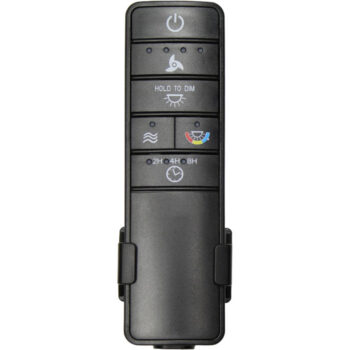
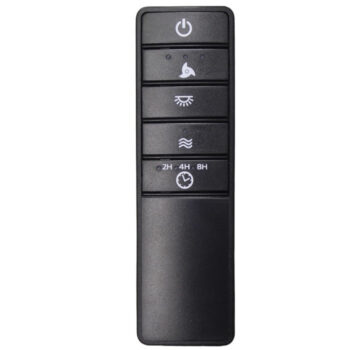
The Hunter universal kit manual describes three fan speeds (high, medium, low) plus off. The SR400 kit has four speeds. Plenty of original remotes offer six speeds, a natural breeze mode or a timer. The RH787T Casablanca remote has six speeds plus reverse, for example, and the TR227B Hampton Bay remote adds color temperature and a delay timer for the light.
Lighting
Fans with separate uplights and downlights, built-in color-changing LEDs or a specific dimming setup rely on their receiver for those functions. A generic receiver usually offers one light output with on/off and dimming.
Ratings
Universal receivers have hard limits. Hunter’s kit is rated for fans of 1.0 amp or less and light kits of 300 watts or less, and the Home Depot kit lists a maximum of 300 W of light and 1.0 A for the motor. Check these numbers against your fan’s label before buying any kit.
When a universal kit is the right choice
To be fair to universal kits, there are situations where they’re the sensible answer:
- The fan never had a remote. Adding remote control to a pull-chain fan means adding a receiver anyway. See our guide to adding a remote to a ceiling fan.
- The receiver is dead and no exact replacement exists. If the original receiver has failed and you can’t find a matching one, a kit swaps out both parts at once.
- You have no idea what the fan or remote is. No label, no manual, no photo to work from. A kit sidesteps identification, as long as its ratings suit your fan.
- The fan is basic. On a simple fan with three speeds, one light and a motor reverse switch, you may not lose anything with a kit.
When an exact match is the better buy
For most people with a working receiver, an exact-match remote wins:
- No wiring. You keep the receiver that’s already installed and working.
- Every feature stays. Reverse, all the speeds, up and down lights, dimming, timers and breeze modes keep working the way they did.
- Less time on a ladder. Many learning-code remotes pair in about a minute from the floor; DIP-switch remotes need only matching switches.
- Wall controls keep working. If your fan also has a remote-style wall control, it should stay paired, because the receiver it talks to is unchanged.
Some exact-match remotes even say so on the listing. The UC7229T Hampton Bay remote, for example, is set up with the receiver already in your fan, and is listed that way.
If the receiver itself has failed, the same logic applies: an exact-match receiver such as the UC7067RC receiver keeps your remote’s features working. See how to replace a ceiling fan receiver, or browse replacement receivers.
How to find your exact match
Look for a part or model number on the back of the remote or inside the battery compartment, and match it exactly; one changed letter can mean a different remote. Our model number guide shows the usual places to look. You’ll often see an FCC ID printed on the back too, but the model or part number is the one to search with. If the label is gone, text a photo of the front and back of the remote to (816) 586-8457, or email info@fanremotes.com, weekdays 8 AM to 5 PM Central, and we’ll help you identify it. In-stock orders placed by 4 PM Central ship the same day, and if an uninstalled part turns out to be wrong, you have 90 days to return it with no restocking fee.
Shop the Parts in This Guide

Frequently Asked Questions
Can a universal remote work without replacing the receiver?
Rarely for ceiling fans. A handheld has to match your receiver's frequency and code format, which is why most universal fan remotes come with their own receiver.
Is a universal ceiling fan remote kit hard to install?
It means turning off the breaker, opening the canopy and wiring in a new receiver. Many homeowners can do it, but hire a licensed electrician if you're not comfortable with wiring.
Will a universal kit work on a fan with a DC motor?
Check the kit's ratings and instructions first. Kits are designed for specific motor types and loads, and your fan's label and manual will tell you what it needs.
Can I keep my wall control if I install a universal kit?
Usually not if the wall control talked to the old receiver. It would need to be compatible with the kit's new receiver.
What if I can't find the number on my old remote?
Look inside the battery compartment and on the fan's motor housing label, or text a photo of the remote to our team for help identifying it.